What makes a successful brand collaboration?
Brand collaborations offer an opportunity to reach new audiences, shift perceptions and create something people wouldn’t expect. But what makes a partnership work beyond the initial buzz? Strategy Director, Caroline, explores the ingredients behind successful collaborations, from shared values and cultural relevance to creating genuine value for consumers.

What makes brand collaborations such a powerful opportunity?
I think the power comes from bringing two different audiences together. There’s an opportunity to tap into the strength of each of those audiences, creating awareness and potentially changing perceptions along the way.
The collaborations that work really well are those where there’s an alignment in values. Both brands have permission to play in that space, but there’s still an element of surprise.
Take Primark and Greggs, for example. They’re very aligned in terms of their values and positioning. Both are mass market, with a huge amount of love for them across culture, particularly youth culture. But bringing them together in an unexpected way, whether through jewellery, a tracksuit top or a pair of trainers, creates something people wouldn’t necessarily have anticipated.
What is it that brings two brands together to collaborate?
I think it’s that search for relevance and the need to maintain freshness over time. A collaboration is a great way to inject something new into both brands, introduce them to a new audience, or take them into a new category or territory.
That’s really important because doing something distinctive is hard. The media landscape is so fragmented, with lots of different brands competing for attention, and more and more leaning into collaborations.
So the question becomes: what is it about your collaboration that’s going to make you stand out? How are you going to generate that traction, love and noise?
Can the most unexpected partners sometimes create the strongest ideas?
Yes, definitely. I think unexpected pairings should still have some underlying alignment, whether that’s from a values or audience perspective.
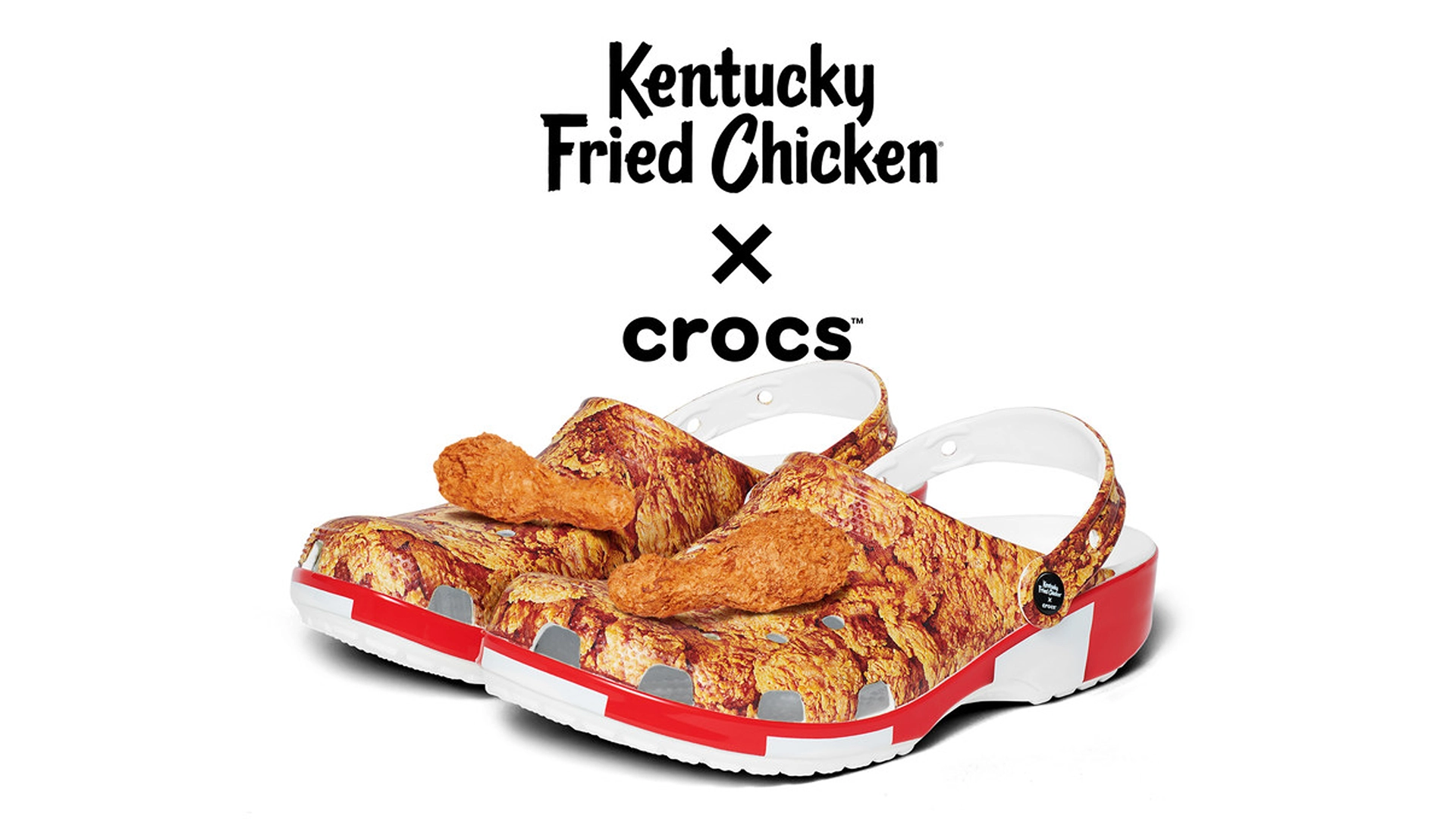
Take Crocs and KFC, for instance. There’s already a lot of cultural cachet around both brands with Gen Z audiences. So, while bringing them together to create a fried chicken-inspired pair of Crocs might seem surprising on the surface, you can understand why it works.
That’s the interesting thing. It might look unexpected, but underneath, there’s a connection that makes complete sense.
What makes a collaboration feel authentic rather than just a marketing exercise?
Again, it’s about how you deliver value to consumers. There has to be something in it for them.
That might be a limited edition, where you tap into that sense of scarcity. People want something they can’t easily get hold of, so you introduce a little friction. They have to go out, look for it and seek it out. That creates an experience that goes beyond the product itself.
Or it might be something that meets an everyday need that hasn’t necessarily been met before. Bringing two brands together can make life, or the decision-making process, that little bit easier.
Ultimately, consumers need to feel there’s a genuine benefit to the partnership.
Do you think a partnership can work on paper but fail in the real world?
Yes. There are plenty of examples of collaborations that look good in a boardroom or on a workshop plan, but when you bring them to market, they fall flat or feel tone deaf.
That can happen because culture moves so quickly. Something that takes a year to get off the ground might no longer feel relevant by the time it launches.
It can also be about the collaborators themselves. Something might happen behind the scenes, or a particular person might lose the cultural currency they once had, which changes how people respond to the partnership.
Pepsi and Kendall Jenner is a good example. The campaign was talking about grassroots movements and protest, but the person fronting it came from a family that arguably personified overindulgence and commercialisation. Those two things didn’t sit comfortably together. It felt manufactured, and there was a real disconnect between the message and the messenger.
What are the biggest pitfalls brands should watch out for when considering a collaboration?
You need to look closely at the social profile and reputation of the brands or individuals you’re partnering with. Are there any risks built into that relationship? Could something they’ve said or done have a negative impact on your brand by the time the collaboration launches?
You also need to consider whether there’s any real cultural currency behind it. If it feels like a purely commercial vehicle, people will see through that.
Are you actually delivering value for the end customer or consumer? If you’re not, they’ll recognise it for what it is. It becomes a case of ’you scratch my back, I’ll scratch yours’ and we’ll see if we can make some money out of it.
That’s not enough to build a meaningful partnership.

What makes the difference between a collaboration that generates attention and one that creates real value?
Attention can come from a negative place, and it can be very short-lived.
The real quality is in creating that attention and then converting it into action, whether that’s taking part in an experience or buying a product.
People might see something and react to it in the short term, but if they don’t have an emotional connection with it, or can’t see how it translates into value for them, it’s unlikely to work in the long term.
You need both. That’s the sweet spot: creating something that captures people’s attention, makes them feel something and ultimately gives them a reason to act.
How important is it to understand the wider brand strategy and commercial objectives when developing a collaboration?
I think you’ve got to be really cognisant of the brand, what it stands for and how the collaboration will feed into its overarching commercial strategy.
There needs to be clarity on the job the collaboration is going to do. Is it about building awareness? Changing perceptions? Converting that interest into sales?
Ideally, you’d do all of those things, but not every brand collaboration will cover every objective. There’s value in each of those outcomes in its own right.
It’s about looking at the overall brand ecosystem, understanding how the collaboration fits into it and how you translate that into value, not just for existing customers but for potential new customers too.