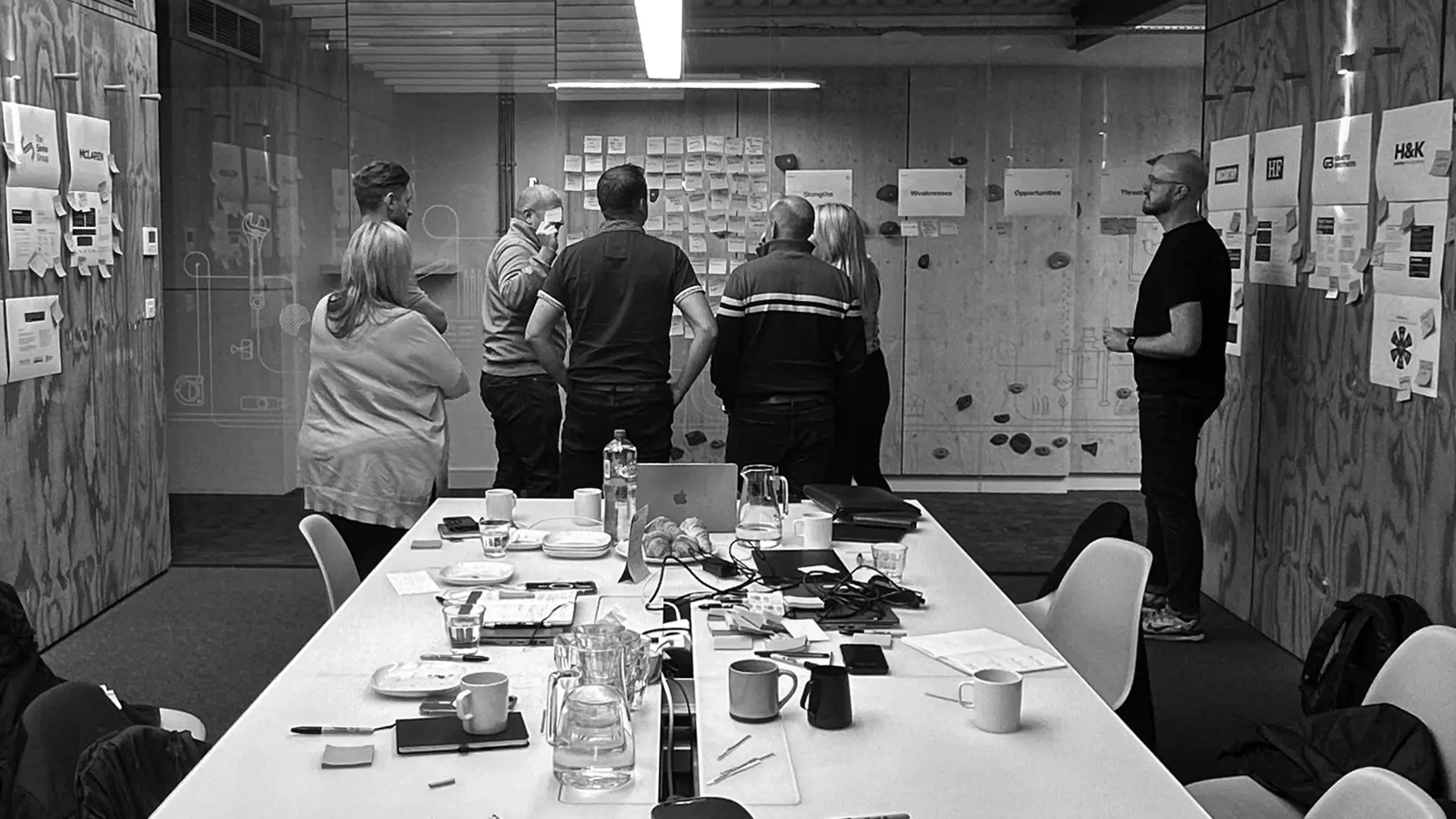
Specification isn’t where the decision starts
If you want your building product to be specified, you need to influence the decision before someone writes the specification.

By the time a product reaches the specification stage, architects, designers and other specifiers may already have made important decisions about the design, materials, performance requirements and suppliers they trust.
So if you’re arriving with your product catalogue and technical data at that point, you might already be late.
When should building product manufacturers engage architects and specifiers?
Earlier than the specification stage.
Picture the scene.
A project is taking shape. The brief is being worked through. Materials are being considered. Ideas are being explored. The shortlist is starting to form.
Nobody necessarily has a spreadsheet of part numbers yet.
They’re asking much more basic questions.
What could this space look like?
What’s going to work here?
What could help us solve this?
Who knows what they’re talking about?
This is where building product manufacturers have an opportunity to get into the conversation – by having something useful to say.
How can building product manufacturers influence specification?
By becoming useful before they ask to be specified.
That might mean sharing insight into a changing market. Helping a specifier solve a particular problem. Explaining a new technology in a way that actually means something. Or showing what’s possible with a product before someone has decided they need it.
Electrolux is a good example.
Rather than simply talking about its appliances, it creates a much bigger picture around them. It talks about spaces, lifestyles, design and the experience those spaces create. It helps its partners and specifiers understand the thinking behind the products, rather than simply giving them another list of features.
The interesting thing is that the product doesn’t disappear.
It becomes more relevant because people understand where it fits.
That’s a useful lesson for building product brands.
You don’t always need to lead with what you make. Sometimes you need to start with the world your product belongs in.
Specifiers aren’t just looking for products
They’re solving problems.
They’re trying to deliver a particular look. Meet a performance requirement. Work within a budget. Satisfy a client. Get a project over the line without creating a headache further down the road.
So if all you give them is another product catalogue, you’re making them do the work of figuring out why you matter.
That’s a missed opportunity.
Your technical expertise should absolutely be there. But it needs to do more than prove that your product meets the requirements.
It needs to mean something.
A material that performs better.
A solution that makes installation easier.
A product that helps achieve a particular aesthetic.
An innovation that solves a problem they hadn’t thought about yet.
That’s when technical expertise starts becoming useful marketing.
Why is brand important in building product specification?
There’s a tendency to think that brand is for consumer businesses, while technical information does the heavy lifting in B2B.
We don’t buy that.
Especially when you’re operating in a market where five products can all start to sound remarkably similar.
If everyone can say they’re high quality, innovative, sustainable and technically excellent, those things stop being much of a reason to choose one brand over another.
Technical information can prove your product works. Brand gives people a reason to remember it, trust it and choose it.
And that preference needs to start building long before the specification lands on the desk.
What do specifiers need from building product manufacturers?
Not more information. The right information at the right point in the project.
When they’re exploring ideas, they might need inspiration.
When they’re solving a design challenge, they might need insight.
When they’re evaluating a product, they need evidence.
When they’re ready to specify, they need clear technical information.
And when the project moves towards delivery, they need practical support.
The job is to understand where they are in the decision-making process and give them something that helps them move forward.
That’s how manufacturers can build relationships that go beyond the transaction.
So, how do you get a building product specified?
You start by building relevance, trust and preference.
Relevance → trust → preference → specification.
The specification is the outcome of those decisions, not the starting point.
That means thinking differently about where marketing begins.
Before the shortlist.
Before the specification.
Before the tender.
When people are still figuring out what they want, what’s possible and who they want to work with.
Because by the time someone writes your product into a specification, you should already have influenced the decision.
At Continuous, we help building product manufacturers turn technical expertise into brands people want to specify – influencing decisions before the specification is written.
To discuss how we can help your brand, get in touch with Scott.
FAQs
When should building product manufacturers engage specifiers?
As early as possible in the project journey – ideally during concept and early design. This is when architects, designers and other specifiers are exploring ideas, considering materials and forming preferences. Engaging at this stage gives manufacturers a chance to influence the decision before the specification is written.
How can building product manufacturers influence specification?
By building relevance, trust and preference before asking to be specified. Useful insight, education, inspiration and technical expertise can help manufacturers become a valued source of knowledge rather than simply another supplier.
What information do architects and specifiers need from manufacturers?
It depends on where they are in the project. Early on, they may need inspiration and ideas. As the design develops, they need evidence and technical information to evaluate products. When they’re ready to specify, they need clear, accurate specification data. Good manufacturer marketing gives people the right information at the right time.
Why is early engagement with specifiers important?
Because many decisions that influence specification are made before the specification itself. Design preferences, materials, product choices and trusted suppliers can all be established during the early stages of a project. Waiting until the specification stage can mean trying to change a decision that has already been made.
How does brand influence building product specification?
Brand creates preference in markets where products can otherwise look and sound similar. Technical information can demonstrate performance and prove a product meets requirements. A strong brand gives specifiers a reason to remember, trust and choose one manufacturer over another.